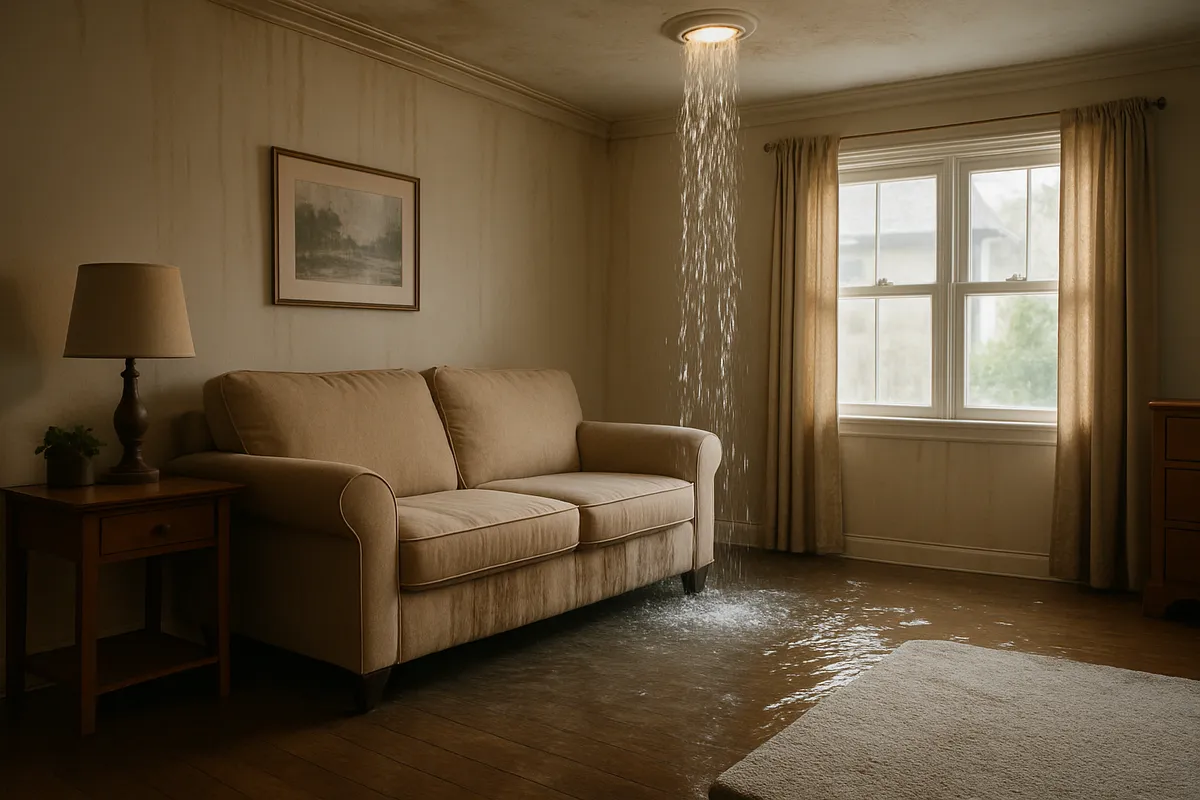
What Is Considered Water Damage for Home Insurance?
Water damage considered covered by most home insurance policies is damage that is sudden and accidental — like a pipe that bursts, a water heater that fails, or an appliance line that lets go unexpectedly — while gradual damage from long-term leaks, poor maintenance, and flooding from outside water is typically not covered under a standard policy. I'm Jordan Brush with Prime Cleaning and Restoration here in Tyler, Texas, and I deal with this exact question all the time with worried homeowners. The short version: your insurance company is mostly asking whether the water came in fast and by accident, or slow and by neglect. That one distinction drives almost everything about your claim.
1. What Insurance Companies Actually Mean by "Water Damage"
When your policy talks about water damage, it's drawing a line between two very different situations. The first is sudden and accidental — something broke when you weren't expecting it. The second is gradual or preventable — something was leaking or wearing out for a long time and nobody caught it. Most standard homeowners policies are built to cover the first and deny the second, and that's where a lot of folks get caught off guard.
Here in Tyler and across East Texas, the most common covered events I see come from inside the house — plumbing that failed, an appliance supply line that burst, a water heater that gave out. Those are the kind of events that happen in a moment and aren't your fault. Flooding from a creek, a river, or heavy rain coming in from outside is a whole different animal, and that usually falls under separate flood coverage, not your regular homeowners policy.
- Sudden and accidental: burst pipes, failed water heaters, appliance line breaks — usually covered
- Gradual leaks: a slow drip under the sink over months — usually denied
- Outside flooding: rising water, storms, overflow — needs separate flood coverage
Pro Tip: Read the "water damage" and "exclusions" sections of your own policy before anything ever happens. Knowing your coverage in advance beats finding out the hard way at the worst possible moment.
2. The Big Dividing Line: Sudden and Accidental vs. Gradual
If there's one thing I wish every homeowner understood, it's this phrase: "sudden and accidental." That's the language insurance leans on, and it's the heart of whether you get paid. A pipe that bursts at two in the morning is sudden and accidental. A pipe that's been weeping behind a wall for eight months and finally rots out the drywall is usually considered a maintenance issue — and maintenance is on you, not the insurance company.
That doesn't mean a slow leak is always denied. Sometimes the leak was hidden and there was no reasonable way you'd have known. But the longer water's been doing its work, the harder it gets to prove, and the more likely you'll hear words like "wear and tear" or "lack of maintenance." That's just the honest truth of how these claims get looked at.
- Sudden events are easier to document and easier to get approved
- Long-term, hidden leaks live in a gray area and get scrutinized hard
- "Wear and tear" and "neglect" are the words that usually mean a denial
Pro Tip: The moment you spot water where it shouldn't be — act. Fast action isn't just about saving your floors; it's about keeping your situation on the "sudden and accidental" side of the line.
3. What's Usually Covered and What's Usually Not
Knowing the categories ahead of time keeps you from being blindsided. Most standard homeowners policies will step up for the kind of water trouble nobody saw coming — but they draw hard lines around flooding, neglect, and things you were supposed to maintain. I always tell folks: your policy is your rulebook, so when in doubt, call your agent and ask plainly.
The good news is that a huge share of the water damage we respond to around Tyler comes from covered events — plumbing and appliances failing inside the home. The frustrating part for homeowners is usually the exclusions they didn't know about, especially the flooding exclusion. A lot of people assume "water is water" and find out flood is a separate thing entirely.
- Typically covered: burst pipes, overflowing appliances, water heater failures, accidental overflow
- Typically not covered: outside flooding, sewer backup (unless you added that rider), slow leaks, neglected repairs
- Often optional add-ons: flood insurance, sewer and drain backup coverage
Pro Tip: Ask your agent specifically about a sewer/drain backup endorsement. It's an inexpensive add-on a lot of homeowners skip, and it covers a mess that standard policies often won't.
4. What Really Drives the Cost of Water Damage Restoration
I won't put a number on your damage from here, because honestly, it depends entirely on the job — and anybody who quotes you a flat price before seeing it isn't being straight with you. What I can tell you is what moves the cost up or down. The size of the affected area matters, the type of water matters, how long it sat matters, and what materials got soaked matters a whole lot.
Clean water from a supply line is one thing. Water that's been sitting long enough to grow mold, or water that came up through a sewer line, is a different level of work entirely because of the health concerns and the extra steps involved. Hardwood floors, drywall, insulation, cabinets — each one responds differently and carries its own restoration path. That's why we look at the actual situation before we ever talk dollars.
- Area affected: one room versus half the house changes everything
- Type of water: clean, gray, or contaminated water each requires different handling
- Time elapsed: the longer it sits, the more it costs — mold and structural issues set in
- Materials involved: hardwood, drywall, and insulation all restore differently
Pro Tip: Document everything with photos and video before anyone touches it, including the source if you can safely reach it. Good documentation protects both your claim and your wallet.
5. The Real Process: From Discovery to Dry
When water hits your home, there's an order to doing this right, and skipping steps costs you more later. Safety comes first, always. Stay out of standing water anywhere near electricity, and only turn off the power if you can do it safely — if there's any doubt, don't risk it, get everyone clear and call for help. No floor or piece of furniture is worth anybody getting hurt.
Once it's safe, the goal is to stop the source, get the standing water out, and start drying fast, because time is working against you the whole time. Then comes documenting for your insurance, removing what can't be saved, and restoring what can. A reputable restoration company will walk you through each step and work alongside your insurance process so you're not fighting that battle alone.
- Make sure it's safe — power and standing water don't mix
- Stop the source and remove standing water quickly
- Dry thoroughly before rebuilding — trapped moisture causes mold
- Document everything for your claim as you go
Pro Tip: Call your insurance company and a restoration pro the same day. The faster drying starts, the smaller your problem stays — and the cleaner your claim looks.
What I've learned about water damage and insurance after years in the field
After years of doing this work here in East Texas, the thing I've learned is that most folks aren't scared of the water — they're scared of the unknown. They don't know if they're covered, they don't know what it's gonna cost, and they don't know who to trust. That's exactly why I run this the way I do. This is not my business. This is God's business, and I'm just doing my best to run it right and treat people the way they deserve.
I got into restoration and air duct work in the first place because I saw folks around Tyler not being told the truth about what quality's supposed to look like. Same goes for water damage. I'm not going to invent a number to make you feel better, and I'm not going to promise you something I can't stand behind. What I'll do is look at your actual situation, tell you honestly what it'll take, and help you understand your insurance coverage so you can make a real decision. You can read more about who we are and how we work over at Prime Cleaning and Restoration.
At the end of the day, all you've really got is your word and your name — and I aim to leave a good one. When a customer comes back with a problem the right way, we fix it. No worries. That's just part of standing behind the work. I'd rather lose a dollar and keep my good name than the other way around, every single time.
I treat the people I serve the way I'd want my own family treated. If you need somebody to listen, explain it plain, and actually care about getting you back to normal — that's the kind of work I built this company to do.
How Prime Cleaning and Restoration helps Tyler homeowners through water damage
At Prime Cleaning and Restoration, we help homeowners right here in Tyler, Texas and across East Texas handle water damage from the first phone call all the way through getting your home dried out and restored. Water damage restoration is the heart of what we do, and we approach it the same way we approach everything — honestly, carefully, and ready to stand behind our work. We don't do fire restoration, but when it comes to water, we're here to help you understand what's happening and what comes next.
We'll walk you through the process, help you understand how your insurance coverage likely applies to your situation, and give you an honest evaluation instead of a number pulled out of thin air. We want to work for you, not take advantage of you. We're regular folks just like our customers, and we know this is stressful — our job is to take some of that weight off your shoulders.
If you've got water where it shouldn't be, or you're just worried and want to understand your coverage before anything happens, give us a call at (903) 594-8007 or reach out through Prime Cleaning and Restoration of Tyler. You can also find us at 12416 St. Hwy. 155 S., Tyler, Texas. We'd be proud to work for you.
FAQ
What is considered water damage for home insurance?
Water damage considered covered for home insurance is damage that is sudden and accidental, such as a burst pipe, a failed water heater, or an appliance line that breaks unexpectedly, while gradual leaks and outside flooding are typically not covered under a standard policy. At Prime Cleaning and Restoration in Tyler, Texas, we see most covered claims come from inside-the-home plumbing and appliance failures. Flooding from outside water usually requires separate flood coverage.
Does homeowners insurance cover water damage from a burst pipe?
Yes, homeowners insurance typically covers water damage from a burst pipe because it's considered a sudden and accidental event. The key is that the pipe failed unexpectedly rather than slowly leaking over months, which insurers often classify as neglect or wear and tear. Documenting the burst quickly with photos helps your claim go smoothly.
Why does insurance deny some water damage claims?
Insurance denies some water damage claims when the damage is judged to be gradual, preventable, or caused by lack of maintenance rather than a sudden accident. A slow leak that went unaddressed for months, outside flooding without flood coverage, or sewer backup without the right endorsement are the most common reasons for denial. Reading your policy's exclusions ahead of time helps you avoid surprises.
How much does water damage restoration cost in Tyler, Texas?
Water damage restoration cost depends entirely on the job, including the size of the affected area, the type of water involved, how long it sat, and which materials got soaked. At Prime Cleaning and Restoration in Tyler, Texas, we don't quote a flat price before seeing your situation because that wouldn't be honest. We give you a real evaluation based on your actual home.
What should I do first when I find water damage in my home?
The first thing to do when you find water damage is make sure the area is safe, staying out of standing water near electricity and only shutting off power if you can do so safely. Once it's safe, stop the water source, remove standing water, start drying fast, and call both your insurance company and a restoration professional the same day. Acting quickly keeps the damage smaller and your claim cleaner.
